
Reviewed · AKROTIRI EXCAVATIONS TOURS
Santorini: Experience Akrotiri with a Licensed Tour Guide
Akrotiri is the rare archaeological site where you can walk along 4,000-year-old streets and look into the rooms of a real prehistoric town. Volcanic ash buried the settlement around 1600 B.C., preserving multi-story buildings, kitchens, toilets, paved squares, and an early drainage system.
I like two things especially: the private format lets you ask questions without being lost in a crowd, and the guide uses photographs of the original wall paintings to restore color and meaning to bare ruins. The main drawback is the short 75-minute visit, which can feel tight if your group wants a slow look at every building.
In This Review
- Key points at a glance
- Why Akrotiri deserves time beyond the caldera
- Meeting your guide at the Akrotiri entrance
- The first walk through Akrotiri’s paved streets
- Inside the buildings, kitchens, and toilets
- Reconstructing the wall paintings with photographs
- What the guide adds to the archaeology
- The Atlantis question, handled with care
- Is $198 good value for a private visit?
- Timing, comfort, and practical details
- Who should book this Akrotiri tour?
- Should you book it?
- FAQ
- Where does the Akrotiri tour begin?
- How long does the experience last?
- Is the tour private?
- Is an entrance ticket included?
- Is transportation included?
- What language is the tour conducted in?
- Who may lead the tour?
- Is the site wheelchair accessible?
- Can I cancel for a refund?
Key points at a glance
- Walk through a buried Bronze Age town: Follow paved streets and squares among preserved buildings rather than viewing ruins from a distance.
- See surprisingly modern planning: Kitchens, toilets, drainage channels, and two- to three-story structures reveal a well-organized community.
- A guide makes the site make sense: Georgia is praised for clear explanations, patience, and her use of images on a tablet.
- Private means personal: The tour works well for families, history fans, and anyone who wants to stop and ask questions.
- Budget for the entrance fee: The tour price does not include the €20 admission charge per person or transportation to Akrotiri.
- Go early if you can: An 8:30 a.m. start has offered a quieter visit, with very few people in the archaeological site at first.
Why Akrotiri deserves time beyond the caldera
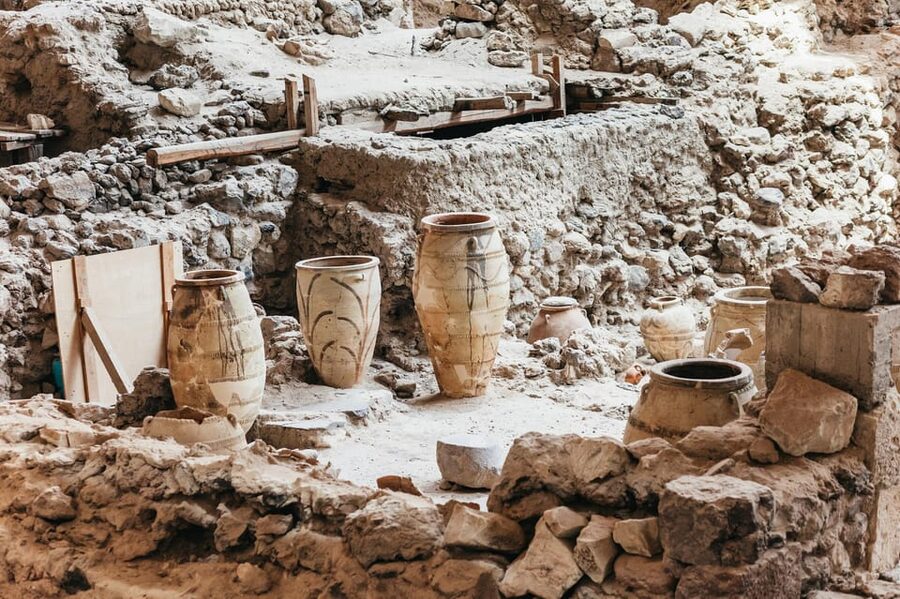
Santorini is famous for white villages and sunset views, but Akrotiri gives you a different picture of the island. Here, the attraction is not modern scenery. It is the chance to see an ancient settlement preserved in place, with streets, rooms, and building plans still visible beneath a large protective roof.
The town was buried by ash after a powerful eruption around 1600 B.C. That disaster ended daily life, but the ash also protected many structures from later damage. Akrotiri is often compared with Pompeii because both sites offer a sudden snapshot of an abandoned city. The comparison is useful, though Akrotiri is far older.
I find the site most rewarding when you stop thinking of it as a collection of broken walls. The remains show how people moved through the town, stored food, managed water, and used different rooms. A good guide helps you make that mental shift.
The site also has a connection to the story of Atlantis. The link is a theory, not an established fact, and the tour treats it as a question to consider rather than a proven answer. That balance matters. You get the myth without losing sight of the archaeology.
More visits to the Akrotiri excavations:
- Akrotiri: Guided Horseback Riding Day Trip to a Beach
★ 4.9 · 477 reviews - Santorini: Akrotiri Entry Ticket and Audio Guide
★ 3.9 · 348 reviews - Archaeological Bus Tour To Akrotiri Excavations & Red Beach
★ 4.6 · 280 reviews
Meeting your guide at the Akrotiri entrance
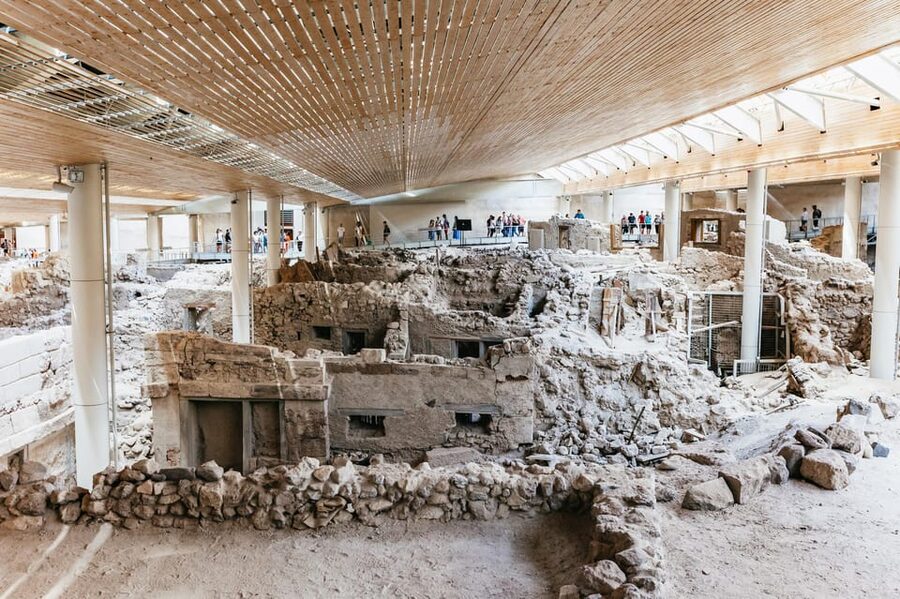
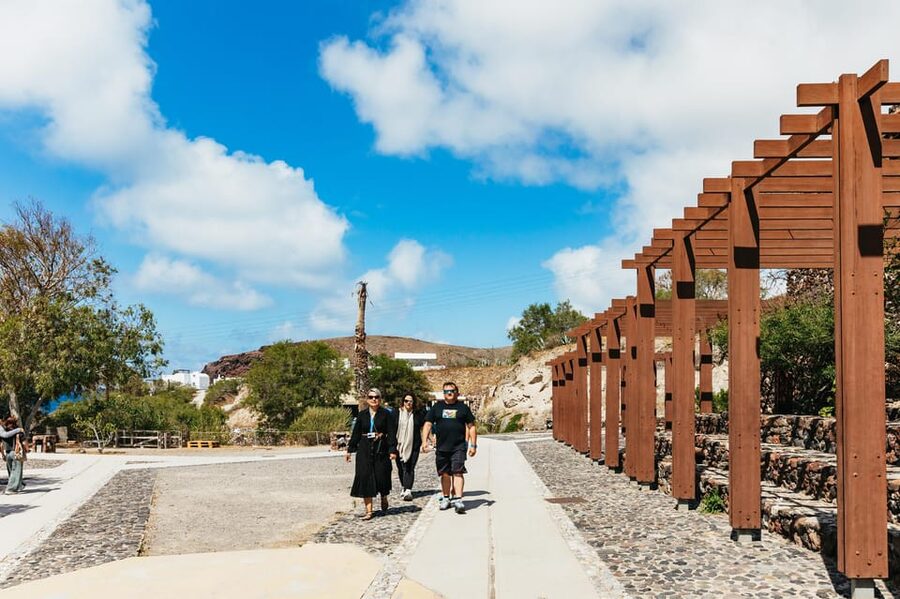
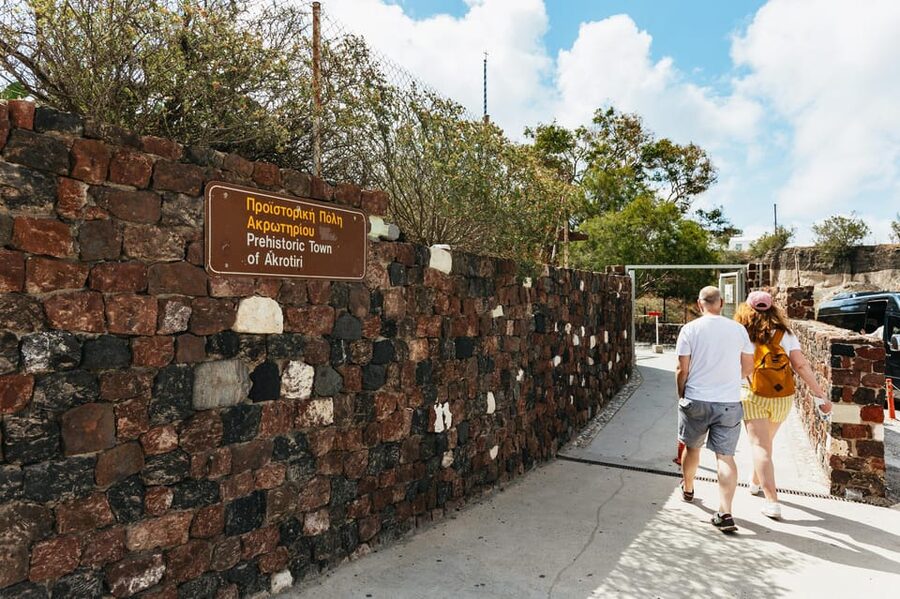
You meet the guide at the entrance to the archaeological site, across from the cashier. This is a simple arrangement, but pay attention to it when planning your day. Transportation is not included, and the tour does not collect you from your hotel, cruise port, or another part of Santorini.
The guide helps you obtain or organize the entrance tickets before the walk begins. The advertised tour price is $198 per group up to one, while the admission charge is separate at €20 per person. Since the group pricing can be hard to interpret for two or more people, check the final booking total carefully before paying.
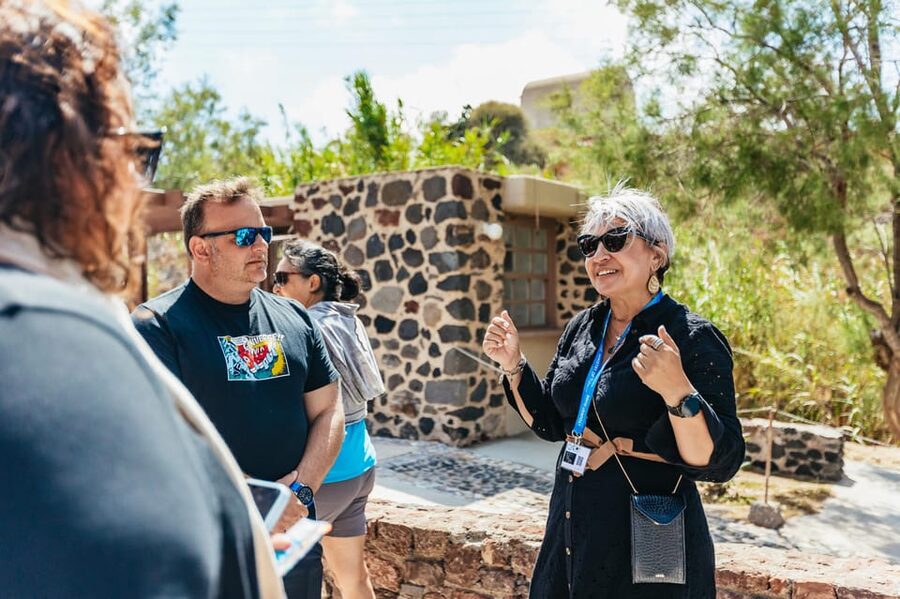
The tour is private and conducted in English. The guide is a licensed tourist guide, and Georgia is the name most closely associated with this experience. Her explanations are especially useful because Akrotiri does not always explain itself clearly to someone walking through alone.
The provider confirms the tour time by email, and opening hours can change. I would check both the confirmation message and the site schedule shortly before your visit. This is particularly important if you are fitting Akrotiri between a cruise arrival, a bus connection, or another timed activity.
The first walk through Akrotiri’s paved streets
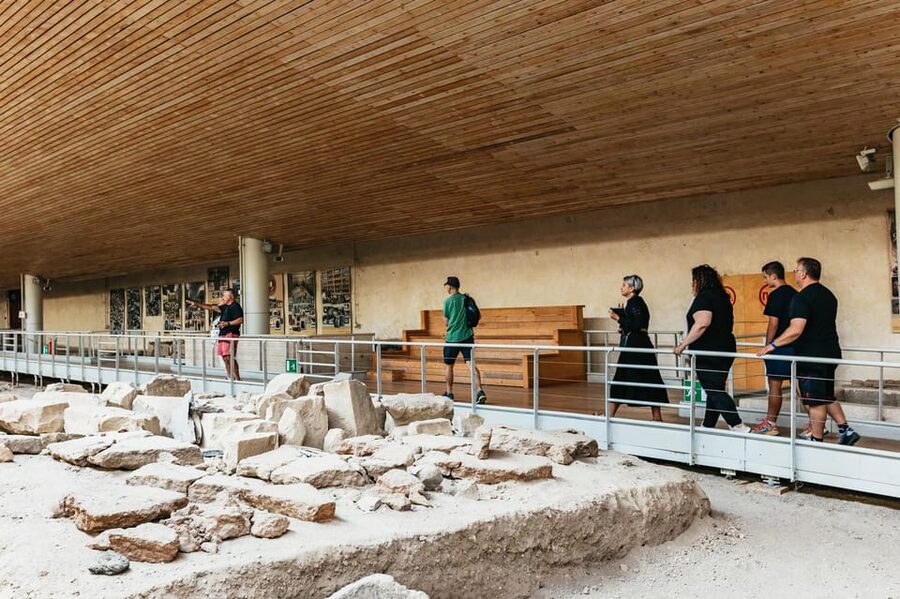
The guided visit lasts about 70 minutes within a total activity time of 75 minutes. You begin on the paved streets and squares of the settlement, where the town’s layout becomes the first major clue to how it functioned.
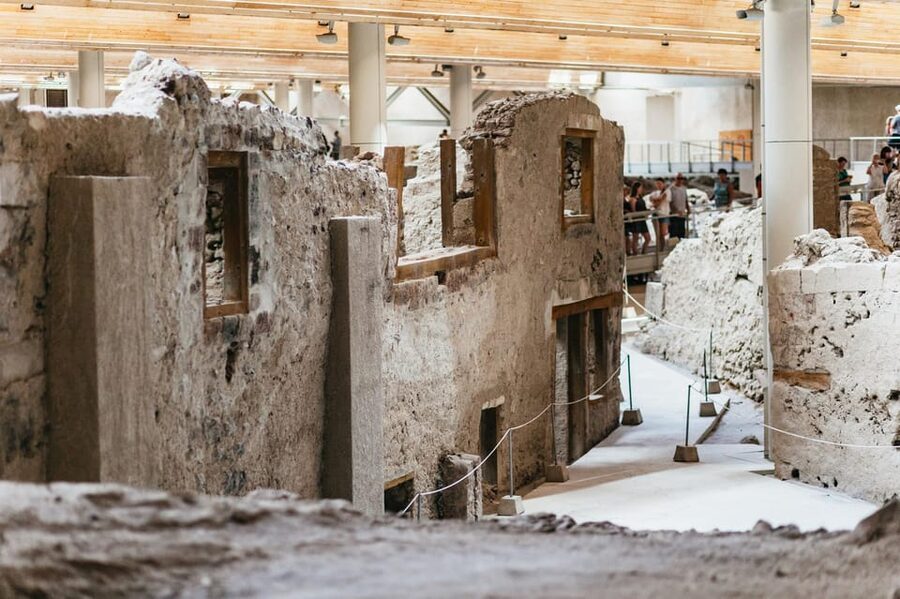
Rather than seeing one isolated building, you get a sense of a connected community. Streets lead between large structures, and the remains of high buildings show that this was not a small village of simple huts. Two- and three-story buildings point to skilled construction and a settled urban way of life.
I like this opening because it gives you a physical sense of scale. You are not simply looking down at pottery in a display case. You are walking through the spaces where people once moved from one building to another.
The guide explains how archaeologists interpret the streets, squares, and building shapes. Some uses are clear, while others remain uncertain. That distinction is worth hearing. Ancient sites can tempt guides into sounding too certain, but Akrotiri is more interesting when you understand which conclusions are firm and which are still being debated.
Inside the buildings, kitchens, and toilets

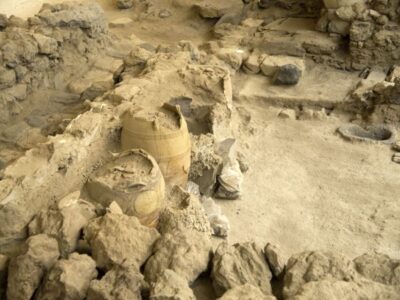
The tour continues into the remains of individual buildings and their interiors. You may see kitchens, toilet facilities, storage areas, and other rooms that help explain ordinary life.
These details are more revealing than grand monuments. A wall tells you that a structure existed. A kitchen suggests how food was prepared. A toilet and drainage system show planning, maintenance, and concern for sanitation. Taken together, these features describe a society with practical systems that may surprise anyone who expects a prehistoric settlement to be basic or disorganized.
The drainage network is one of the most memorable parts of the visit. It shows that the town’s builders had thought about water and waste beneath the streets. The phrase indoor plumbing can sound too modern, but the remains do show an impressive level of urban planning for a settlement more than 3,500 years old.
Look carefully at the height and arrangement of the buildings. The ruins do not always present an obvious room-by-room picture. A guide can point out where floors once existed and help you imagine the upper levels that have disappeared.
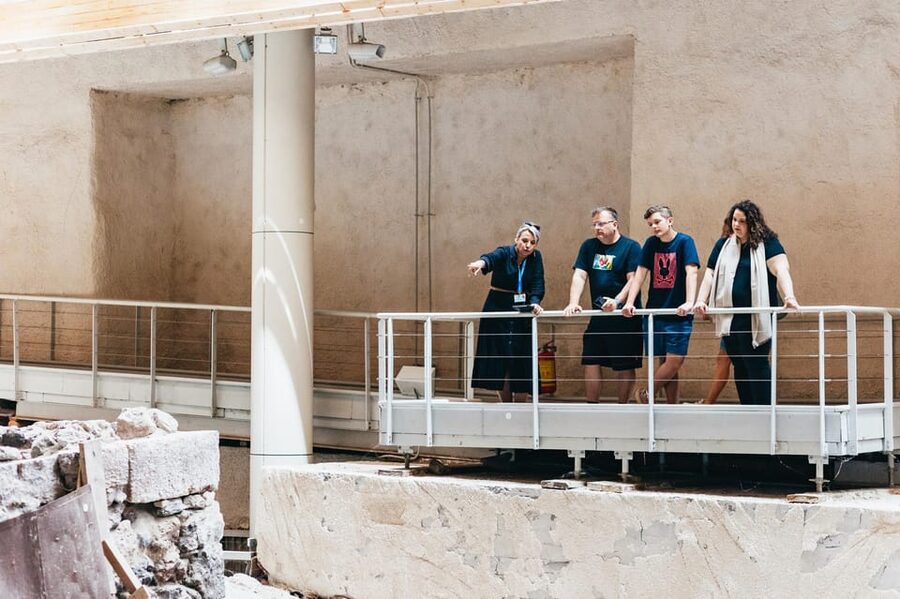
This is also where a private tour earns its keep. You can ask why a room is thought to be a kitchen, what a narrow opening may have done, or how archaeologists know that a building had more than one story. The guide can adjust the pace to your interests instead of following a fixed speech for a large group.
More Santorini tours worth comparing
- Santorini: Sunset Guided Tour with Hotel Pickup
★ 4.8 · 900 reviews - Santorini: Island Highlights Guided Day Trip with Oia Sunset
★ 4.4 · 713 reviews - Santorini: Guided Tour to 3 Wineries with Wine Tastings
★ 4.8 · 693 reviews - Santorini: Thirassia Islands and Volcano Guided Cruise
★ 4.4 · 650 reviews
Reconstructing the wall paintings with photographs
Many of the original wall paintings are no longer attached to the buildings you see at Akrotiri. Some were removed for preservation or are held in museums elsewhere in Greece. As a result, bare walls can leave you wondering what the town looked like when it was occupied.
Georgia has used photographs on a tablet to show the paintings and artifacts connected with the excavation. This is a small but important teaching tool. You can compare the plain remains in front of you with images of the colorful artwork that once decorated the rooms.
The pictures also help you understand that the town was more than a functional settlement. Its residents invested time and skill in decoration, imagery, and craftsmanship. The visual material gives the ruins a human scale without asking you to accept invented reconstructions as fact.
If you enjoy ancient art, this part may be the highlight. If you are visiting with children, the images can also provide a welcome change from looking at stone, plaster, and foundations. The guide’s clear English and willingness to answer questions make it easier to keep the whole group involved.
What the guide adds to the archaeology
Akrotiri is worth visiting on its own, but I would strongly favor a guided visit over a silent walk. Without context, it can be difficult to know what level you are viewing, how a room was used, or why a particular wall matters.
The guide explains how society may have been organized and how people lived their daily lives. You hear about the settlement as a working town, not just an archaeological project. That wider view connects the streets, buildings, plumbing, and paintings into one story.
Georgia is repeatedly praised for being patient with questions and for explaining difficult points in easy-to-follow English. She has also helped visitors picture missing structures and artifacts by showing maps, drawings, and photographs on a tablet. For a site with so much lost material, that extra visual help is valuable.
The experience suits serious history fans, but you do not need to arrive with background reading. One history teacher learned details that challenged his assumption that Akrotiri was a Minoan settlement. That is a useful reminder that ancient Aegean cultures are not interchangeable, and a proper guide can sort out those distinctions.
Families can also make good use of the private format. Georgia has adjusted explanations for children, answered repeated questions patiently, and kept mixed-age groups engaged. You can ask for a slower pace or a simpler explanation without worrying about holding up a large tour.
The Atlantis question, handled with care
Akrotiri’s burial beneath volcanic ash has helped fuel theories about Atlantis. The tour brings up those connections, but the site should not be reduced to a treasure hunt for the lost city.
I prefer the question as a side note to the main archaeological story. You can consider similarities between the myth and the eruption while still focusing on what the ruins actually show. The city’s planning, artwork, and buildings are fascinating enough without a dramatic claim that cannot be proved.
This approach makes the tour useful for both casual sightseers and history enthusiasts. You get a memorable legend, but you also learn how archaeologists separate evidence from speculation.
Is $198 good value for a private visit?
The price needs careful thought. At $198 per group up to one, this is not a cheap add-on for a solo visitor. The separate €20 entrance fee per person and the cost of reaching Akrotiri must also be included in your budget.
For a larger private group, the price may make more sense because the guide cost is spread across several people. For two people, it is a personal choice. The added explanation can transform the visit, but you should compare the total against a standard group tour or a self-guided entrance.
I would pay for this format if Akrotiri is a priority, especially if you have limited time or want to understand what you are seeing. The value is not in getting into the site alone. It is in having one expert guide interpret the building levels, drainage, interiors, missing paintings, and uncertain evidence as you move through the town.
The 75-minute duration keeps the visit manageable, but it is also the clearest limitation. Several people have wished for more time. If you like to photograph every corner or read every sign, you may feel hurried. A private guide can answer questions efficiently, yet the scheduled visit still has a firm shape.
Timing, comfort, and practical details
An early start is worth considering. An 8:30 a.m. private visit has provided a quiet first half-hour, allowing the group to see the site with very few other people around. That makes it easier to hear the guide and to study the streets without a crowd nearby.
Opening hours may change, and the activity provider confirms the final time by email. Do not build a tight connection around an unconfirmed start. If you are arriving from a cruise ship, allow extra time for delays, since transport to Akrotiri is not part of the activity.
The archaeological site is wheelchair accessible according to the activity information. Food and drinks are not allowed inside, so plan to eat before or after the visit. A camera is allowed and is worth bringing, especially for building details and the guide’s visual comparisons.
The walk is described in the supplied information as an easy, leisurely stroll, but you are still moving through an archaeological site. Comfortable shoes and protection from Santorini’s sun are sensible choices, even though they are not listed as required items.
Who should book this Akrotiri tour?
I would recommend it most strongly to:
- People who want archaeology, not just another viewpoint
- Families who benefit from a private guide and flexible questions
- Visitors with a serious interest in Bronze Age Greece
- Cruise passengers who need an efficient, focused visit
- Anyone who finds ancient ruins hard to understand without explanation
You may skip the private guide if your main goal is simply to enter, take a quick look, and move on. The extra cost is harder to justify when you have little interest in the site’s building plans or daily life.
I would also consider visiting the Prehistoric Museum in Fira before Akrotiri if your schedule allows. The museum can provide useful background for the objects and paintings connected with the settlement, making the archaeological site easier to read.
Should you book it?
Yes, if you want Akrotiri to become more than a walk past old walls. The site itself is remarkable, but the guide supplies the missing pieces: the vanished upper floors, the purpose of rooms, the town’s drainage, the society behind the buildings, and the paintings that once filled the interiors.
Book it for the private attention, not for a long visit. Seventy-five minutes is enough for a focused introduction, but not for a relaxed all-day archaeological study. Confirm the time, budget separately for €20 admission per person and transport, and try for an early start.
For solo visitors, the price deserves a close look. For couples, families, or small groups who care about history, the personal guidance can be well worth the added cost.
FAQ
Where does the Akrotiri tour begin?
Meet your guide at the entrance to the archaeological site, across from the cashier.
How long does the experience last?
The activity lasts 75 minutes, with about 70 minutes listed for the guided tour inside Akrotiri.
Is the tour private?
Yes. It is a private group tour.
Is an entrance ticket included?
No. The archaeological site entrance fee is separate and listed as €20 per person.
Is transportation included?
No. You must arrange your own transportation to and from Akrotiri.
What language is the tour conducted in?
The live tour is conducted in English.
Who may lead the tour?
The experience is provided by Dima Georgia, and Georgia is the guide most often identified with the visit.
Is the site wheelchair accessible?
Yes. The activity information states that the archaeological site tour is wheelchair accessible.
Can I cancel for a refund?
You can cancel up to 24 hours in advance for a full refund. The activity also offers reserve now and pay later booking.
Newest reviews from Santorini
- Santorini: Full-Day Small Group Tour★ 5.0 · 3 reviews
- Guided Tour: the Myth of Lost Atlantis★ 5.0 · 3 reviews
- Akrotiri: Singles’ Aromatherapy Massages★ 5.0 · 3 reviews
- Private Transfer from Santorini Airport to Santorini★ 5.0 · 3 reviews
- Private Boat tour with snorkeling & Sea Caves★ 5.0 · 3 reviews
- Santorini: Island Tour for Cruise Travelers★ 5.0 · 3 reviews
- Top Spots Bus Tour in Santorini with Transportation★ 3.5 · 3 reviews
- Private Captivating Santorini Highlights Tour inc. tastings★ 5.0 · 3 reviews
Akrotiri Excavations Tours, compared.

Archaeological Bus Tour To Akrotiri Excavations & Red Beach
Read our review →Archaeological Bus Tour to Akrotiri Excavations & Red Beach
Read our review →
Private Cultural Villages Sightseeing & Akrotiri Excavations
Read our review →

Private Group Visit to Akrotiri & 3 Wineries with Tastings
Read our review →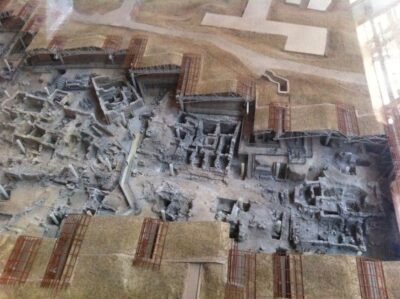
Browse the lists this tour appears in